


June 19, 2026

SCAPE-U Dissemination Meeting Highlights Community-Led, Lived-Experience approaches to Mental health care in Uganda
SCAPE-U Dissemination Meeting Highlights Community-Led, Lived experience approaches to Mental health care in Uganda
Stakeholders from Uganda’s mental health sector gathered at Silver Springs Hotel in Bugolobi on 20th May 2026 for the SCAPE-U dissemination meeting, an event convened to share study findings and experiences from the SCAPE-U study. The study collaborated with people with lived experience of Psychosis in Uganda and was funded by Welcome Trust UK. The meeting provided a platform for researchers, health workers, people with lived experience, caregivers, policy actors, funders, and community representatives to reflect on what worked, what was learned, and how the findings can inform future mental health programming in Uganda.
The dissemination brought together people with lived experience of psychosis, caregivers, service user facilitators, Village Health Teams, primary health workers, researchers, Ministry representatives, funders, and partner institutions including YouBelong Uganda, Butabika National Referral Mental Hospital, George Washington University, the University of Nottingham, and Wellcome Trust representatives. Their participation reflected the multi-sectoral nature of SCAPE-U and the importance of collaboration between communities, health facilities, research institutions, government structures, and families in improving mental health outcomes.
Throughout the day, presentations and panel discussions underscored the central role of people with lived experience in shaping mental health care. SCAPE-U demonstrated that people who have experienced psychosis can contribute meaningfully as peer supporters, co-designers, advocates, trainers, and community educators. Through photovoice, recovery narratives, home visits, and direct engagement with families, primary health workers and VHTs, service user facilitators helped reduce stigma, encourage treatment adherence, support recovery, and improve understanding of psychosis at household and community level.
During a dialogue session, SCAPE-U facilitators shared how they were trained to use photographs and personal recovery stories to engage families and communities. Their accounts showed that participation in SCAPE-U not only supported others but also strengthened their recovery journey, medication adherence, family relationships, and sense of purpose. Caregivers and community health workers also described how the home visits helped families better understand mental illness, reduce fear and stigma, and support people with psychosis to remain in care.
Study investigators presented SCAPE-U as a feasibility and acceptability study designed to test a collaborative model of care for people with psychosis across primary care, community, and home settings. The study highlighted three key areas of intervention: strengthening the capacity of primary health workers to diagnose and manage mental health conditions, improving the ability of VHTs to identify and refer people in need of support, and engaging people with lived experience to provide home-based peer support through structured and supervised visits.
The findings suggested that collaboration with people with lived experience is both valuable and feasible when supported by appropriate training, supervision, safeguarding tools, wellness planning, and access to medical and psychosocial support. The meeting also identified important implementation challenges, including limited availability of essential mental health medicines at lower-level facilities, the transfer of trained health workers, difficulties identifying newly diagnosed patients, stigma, relapse risks among peer supporters, and the need for sustainable support systems beyond project timelines.
Speakers emphasised that community-based mental health care must be inclusive, practical, adequately supported, and sustained. A recurring message from the meeting was that “there is nothing for us without us,” highlighting the need to include people with lived experience in the design, delivery, evaluation, and scaling of mental health services. Dr. Harriet Nakku commended the work and described it as a powerful step towards “bringing mental health back to the community”
The dissemination identified several priorities for health systems and policy. These included strengthening mental health services at primary care level, integrating mental health into routine outpatient care, training and mentoring primary health workers and VHTs, improving referral pathways, expanding community sensitisation, developing age-appropriate information and education materials for schools, engaging faith leaders and other community actors, and improving access to essential mental health medicines. Participants also discussed the need to formalise and sustain peer support roles so that service user facilitators can continue contributing beyond the life of individual research projects.
Participants called for the SCAPE-U model to be scaled beyond Kampala and Wakiso so that more communities across Uganda can benefit from locally grounded, person-centred mental health care. They encouraged stronger collaboration among the Ministry of Health, Butabika National Referral Mental Hospital, district health teams, community structures, schools, faith leaders, caregivers, researchers, funders, and people with lived experience. The meeting closed with a shared commitment to ensure that the knowledge generated through SCAPE-U contributes to practical action, stronger community mental health systems, reduced stigma, and improved recovery support for people living with psychosis and their families.
June 19, 2026
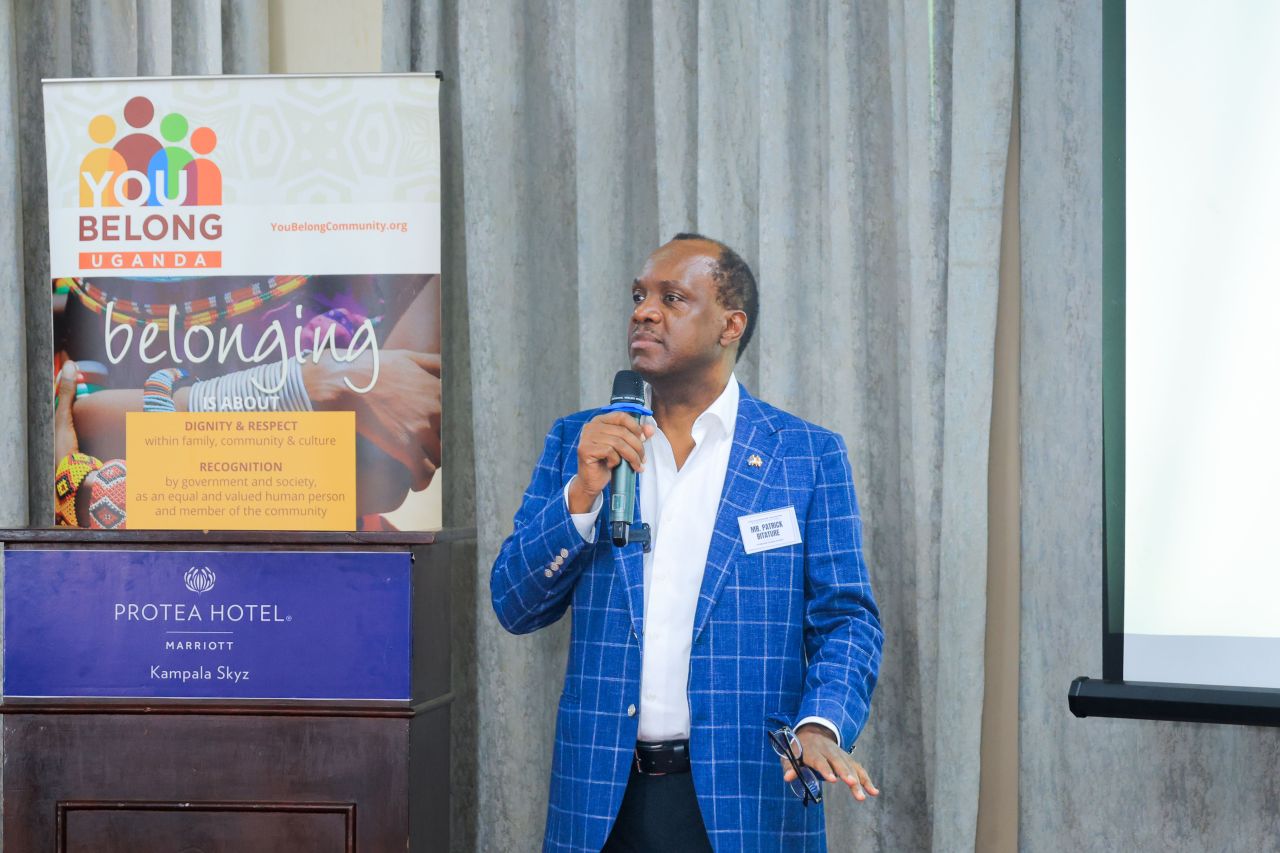
Mr. Patrick Bitature’s Speech at the Ministry of Health and YouBelong Uganda Stakeholders Meeting
Mr. Patrick Bitature’s Speech at the Ministry of Health and YouBelong Uganda Stakeholders Meeting
Distinguished guests, health professionals, community leaders, members of the YouBelong family, and fellow Ugandans,
Good morning.
I am deeply honored to stand before you today as Patron of YouBelong, an organization founded on a simple but powerful belief: every person, regardless of their mental health condition, belongs in a family, belongs in a community, and belongs in society.
Today we gather to discuss a challenge that is no longer hidden in the shadows. Mental health has become one of the most pressing public health issues of our time.
In Uganda, mental health cases have risen significantly in recent years. Ministry of Health statistics indicate a 25 percent increase in reported mental health cases over the last four years. Health experts estimate that nearly one quarter of Ugandan adults and almost one quarter of our children are affected by mental health conditions, yet many never receive the support they need.
The burden is especially heavy among our young people. We are seeing increasing levels of depression, anxiety, hopelessness, substance abuse and emotional distress. Alcohol and drug abuse have become major drivers of mental illness, particularly among the youth. At Butabika Hospital, approximately 30 percent of admitted patients are reported to have challenges related to alcohol or substance abuse.
The result is visible to all of us.
Butabika Hospital was designed for about 550 beds, yet it frequently accommodates over 1,000 patients. Its dedicated staff work tirelessly under immense pressure, but the reality is that no single hospital can carry the mental health burden of an entire nation.
This is why the conversation about decongesting Butabika is so important.
The solution is not simply building bigger wards. The solution is bringing care closer to where people live.
At YouBelong, we believe that many patients who have stabilized and are no longer acutely ill should not spend months or years institutionalized. With the right support, education and follow-up, they can return to their families, their villages, their churches, their mosques, their workplaces and their communities.
We work with families to understand mental illness, to remove fear and stigma, and to provide practical support so that recovery can happen at home. We help communities understand that mental illness is not a curse, not a punishment and not a source of shame. It is a health condition that deserves treatment, compassion and dignity.
Every patient successfully reintegrated into the community creates space for someone who genuinely requires specialized hospital care. Every family empowered becomes part of the solution. Every community that embraces rather than rejects a person living with mental illness becomes a place of healing.
Mental health is not just a medical issue. It is a family issue. It is an education issue. It is an employment issue. It is a community issue. It is a national development issue.
We must therefore invest in prevention, especially among young people. We must tackle alcohol and drug abuse. We must strengthen counselling services in schools and universities. We must support parents, teachers, religious leaders and community workers to recognize the early warning signs of mental illness.
Most importantly, we must replace stigma with understanding.
Let us create a Uganda where seeking help is a sign of strength, not weakness.
Let us create a Uganda where families are equipped to care for their loved ones.
Let us create a Uganda where recovery happens not only in hospitals, but also in homes and communities.
And let us ensure that every person struggling with mental illness hears these powerful words:
“You are valued. You are loved. You are not alone. You belong.”
“The true measure of a society is not how it treats its strongest members, but how it treats its most vulnerable. Every person living with mental illness is someone’s son, daughter, brother, sister, mother or father. They deserve not our fear, but our compassion; not our rejection, but our support; not isolation but belonging. Together, let us build communities where healing is possible, hope is restored, and every person knows that they belong.”
Thank you, and may God bless you all.
June 18, 2026
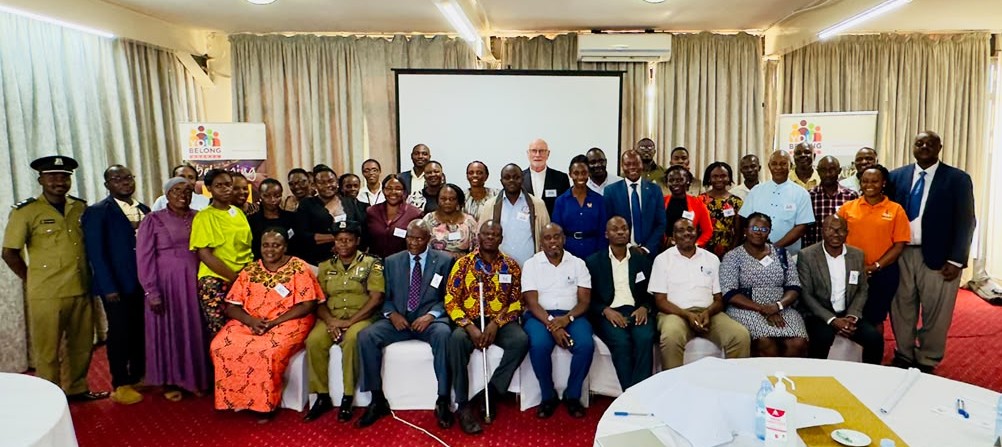
Ministry of Health and YouBelong Uganda engage with stakeholders to share ideas to assist in decongesting Butabika Hospital
Ministry of Health and YouBelong Uganda engage with stakeholders to share ideas to assist in decongesting Butabika Hospital
On 16th June 2026, the Ministry of Health and YouBelong Uganda convened a stakeholders’ roundtable at Skyz Hotel Naguru under the theme, “Sharing Ideas to Assist in the Decongestion of Butabika Hospital.” The meeting brought together representatives from the Ministry of Health, the Ministry of Education and Sports, the Ministry of Gender, Labour and Social Development, Butabika Hospital, regional referral hospitals, civil society organisations, the Police, caregivers, and people with lived experience. The discussion focused on practical, collaborative approaches to easing pressure on Uganda’s national referral hospital for mental health while strengthening community-based systems of care.
Patrick Bitature, Patron of YouBelong Uganda, called for a fundamental shift in how Uganda responds to mental illness. He noted that not every patient requires long-term institutional care and emphasised the importance of equipping families and communities to support recovery. He observed that Butabika Hospital, originally designed for approximately 550 beds, is currently accommodating more than 1,000 patients. He also highlighted the compounding effects of alcohol and substance use, as well as the persistent stigma that discourages families from caring for affected relatives at home.
Monsignor David Cappo, Chief Executive of YouBelong Uganda, underscored the need for cross-sector collaboration and a sustained commitment to restoring dignity to vulnerable people. He said the roundtable was intended to generate practical ideas for reducing the hospital population over the next three to four years through a joint plan that meaningfully includes people with lived experience.
Speaking on behalf of the Ministry of Health’s Department of Non-Communicable Diseases, Dr Kalani described the congestion at Butabika as a health-system challenge rather than an isolated hospital issue. He pointed to rising rates of mental illness and increasing demand for services, both of which are placing strain on infrastructure, staffing, and quality of care. He stressed that long-term solutions will require coordinated action across government sectors, communities, and the private sector to reduce relapse and improve support after discharge.
The YouBelong model as a pathway to reintegration
Kenneth Ayesiga, Team Leader at YouBelong Uganda, outlined the YouBelongHome programme and its role in supporting patients before and after discharge. The model includes identifying individuals ready for discharge, engaging families, and preparing households for reintegration through psychoeducation, family mapping, and relapse awareness. He noted that successful recovery depends not only on returning a patient home, but on ensuring that the home environment is prepared to provide support. The programme also works with nearby health centres, outreach clinics, and other community structures to strengthen continuity of care.
Eric Odoki presented findings from YouBelong Uganda’s programme, which supports more than 40 people each month. According to the report, 85% of those who returned home remained there. The findings identified continuity of care as the most significant gap, with alcohol and substance use emerging as key drivers of relapse.
Representing Butabika Hospital, Dr Birabwa spoke about the burden of managing discharges in a context where many patients present with severe, chronic, and relapsing mental illness. She noted that the hospital continues to care for long-stay patients and others who return repeatedly in crisis. Emphasising that recovery cannot depend on medication alone, she called for stronger reintegration systems that ensure patients are supported to remain stable after returning to their communities.
A call for stronger local services, caregiver support, and policy implementation
Participants agreed that meaningful decongestion will depend on strengthening lower-level and regional mental health services, improving medicine availability, expanding psychosocial support, and building the capacity of health workers and community structures.
Edith Kebirungi, a social worker at YouBelong Uganda, addressed the factors driving admissions to Butabika Hospital. She explained that inflow is shaped not only by family and community challenges, but also by broader health-system gaps, including understaffing, medicine shortages, and limited mental health capacity at lower-level facilities. She argued that addressing both admission and discharge pathways simultaneously is essential to creating a more stable and responsive system.
During the discussion, participants raised issues related to justice, school-based mental health, police responses, psychosocial support, and the need to operationalise existing policies. Dr Mutamba encouraged stakeholders to prioritise practical policy and community-level changes, including training for community health workers and police officers. Dr Hafswa Lukwata emphasised that regional referral hospitals should play a far more central role in expanding access to care. By the close of the meeting, there was broad consensus that reducing pressure on Butabika Hospital will require a coordinated response that begins well before admission and continues long after discharge.
Closing the meeting, Dr Hafsa Lukwata called for sustained collaboration among government, health workers, civil society, caregivers, and people with lived experience. The roundtable ended with a shared commitment to translate the day’s recommendations into a long-term plan for community-based mental health care in Uganda.
April 13, 2026
YouBelong Uganda Marks 10 years of advancing Community Centered Mental Health Care
YouBelong Uganda Marks 10 years of advancing Community Centered Mental Health Care
Kampala, Uganda | April 2026 – YouBelong Uganda celebrates a decade of strengthening community mental health care in Uganda.
YouBelong Uganda is proud to mark 10 years of pioneering work in strengthening community‑based mental health care in Uganda. Founded in 2016, the organisation has spent the past decade advancing a sustainable approach to mental health, one that places dignity, family, and belonging at the centre of recovery.
Established with a shared vision from its founders, Monsignor David Cappo and Dr. Brian B. Mutamba, YouBelong Uganda set out to challenge the over‑reliance on overcrowded and under‑resourced mental institutions across sub‑Saharan Africa. From the beginning, the organisation has advocated for a system where hospitals provide high‑quality short‑term acute care, while long‑term recovery is supported by empowered families and communities.
At the heart of YouBelong Uganda’s work is a simple but powerful belief; recovery thrives where people belong. By reconnecting individuals living with mental illness to their families and communities, the organisation works to reduce stigma, restore dignity, and strengthen long‑term recovery beyond institutional settings.
 YouBelong Uganda’s most impactful innovation is the YouBelongHOME program. This program focuses on decongesting and deinstitutionalizing Uganda’s national mental hospital by supporting the safe and sustainable reintegration of persons living with mental illness into their families and communities. Over the past ten years, the program has successfully reintegrated more than 1,000 individuals, while also providing family psychoeducation that equips caregivers with the knowledge and skills needed to support recovery. By reinforcing the vital role of families in mental health care, the YouBelongHOME program has demonstrated that family‑centred care significantly reduces relapse rates and helps to challenge stigma surrounding mental illness at both family and community levels.
Youth engagement has also been a central pillar of YouBelong Uganda’s journey. Through Youth Consultative Groups, the organisation actively works with young people who have lived experience of mental health conditions. Using a co‑production approach, these young people contribute to program design and learning processes, ensuring that our programs are shaped by real experiences and voices of recovery.
In schools, YouBelong Uganda continues to create safe and nurturing learning environments through the Powerful Minds programme. This innovative approach recognises schools as vital communities for wellbeing, where children’s mental and emotional development forms the foundation of education. By fostering collaboration between students, families, communities, and healthcare centres, the programme empowers children and adolescents to become active participants in their own wellbeing.
YouBelong’s work is made possible by a dedicated multidisciplinary team of social workers, community mental health nurses, occupational therapists, psychiatric clinical officers and support staff. Their collaborative and innovative work reflects YouBelong Uganda’s commitment to system‑wide transformation rooted in community care.
As YouBelong Uganda looks to the future, the organisation recognises that the coming years are critical for mental health reform in Uganda. With gratitude to our partners, communities, and supporters, YouBelong Uganda remains committed to building a mental health system where recovery happens at home, within families, and in communities.
March 11, 2026
Mental illness in the eyes of mother and child
At 39, “Maria” thought she had seen it all. She was 14 when she first suffered symptoms of a mental disorder. Orphaned, she dropped out of school in Primary Five, did menial jobs, was abandoned by family, friends and the fathers of her three daughters and was humiliated when she ran naked in broad daylight in a Kampala suburb, where she lived with her in-laws.
March 07, 2026
Back To School. Not As Easy As You Think!
By the Women For Women Group, of YouBelong Uganda
We are all relieved that school will begin again soon. But please beware, and be aware! So much damage has been done to so many school children, even though we know the lockdowns were necessary. Our school children are going to need a lot of help to adjust back to school. Don’t take this for granted, otherwise we are going to see even more emotional pain and trauma in the lives of our children. Covid-19 is not only dangerous to physical health, it is also the enemy of our children’s mental and emotional wellbeing. Two years away from school has had a nasty impact on children and readjusting to school life and work, and socialising with school friends cannot be left to children, alone. It won’t be an automatic process for them, and we do them a big disservice if we don’t realise this. We need to do something about it. Signs of distress may be hidden, so please be vigilant, please don’t just leave them to it!
And while the emotional support and guidance is needed for both girls and boys as they re enter the learning and social dynamic of school, let us not forget the shocking harm that many school girls have suffered during school closure. Many girls of school age won’t be returning to school because of abuse, pregnancies, and forced marriages. This is a national tragedy. And of all the girls who will return to school, many of them come back to the learning and nurturing environment of school life, forever changed. They are emotionally scarred by physical or sexual abuse, either as victims or witnesses, as well as social isolation, and for many a loss of hope in their future. Parents and teachers need to be ready for many signs of distress.
Our plea to parents and teachers is please do not interpret outbursts of anger, signs of depression or anxiety, or difficult behaviour, as children just being naughty, and something to be controlled or punished. Please no corporal punishment! See these behaviours as signs of emotional distress. See these signs as a cry for help, not punishment.
So as the Women For Women Group, of YouBelong Uganda, an organisation committed to the mental and emotional health of Ugandans, we say to parents and teachers, be ready, and act with love, care, and emotional support.
School Principals and Teachers, we suggest to you, that you have preliminary discussions about the emotional needs of school children, who are about to descend upon you. Don’t just wait for issues to emerge in the classroom, have a plan of action, ready.
Be mindful and observe carefully. If problem behaviour occurs, attempt to see behind the behaviour to the emotional needs or distress of girls and boys. Avoid corporal punishment. It is so harmful, and it is against the law. An initiative we suggest, is that schools develop GENDER SPECIFIC SCHOOL CLUBS, so that girls and boys can meet separately, with a senior teacher, and just talk about their feelings. Let girls and boys express themselves, share their fears, their worries, and guide them to support one another. This would be a huge step forward in getting our school girls and boys back into the learning and social environment of school, and it would start to address the harsh issues they have endured in the last two years.
The last two years have been hard for all of us. And Covid-19 issues will be with us for much longer. But as a nation of Ugandans of good will, before God, let us reach out to our school children in their time of need. For they are our future, and we are called to prepare them to be the future of Uganda.
March 07, 2026
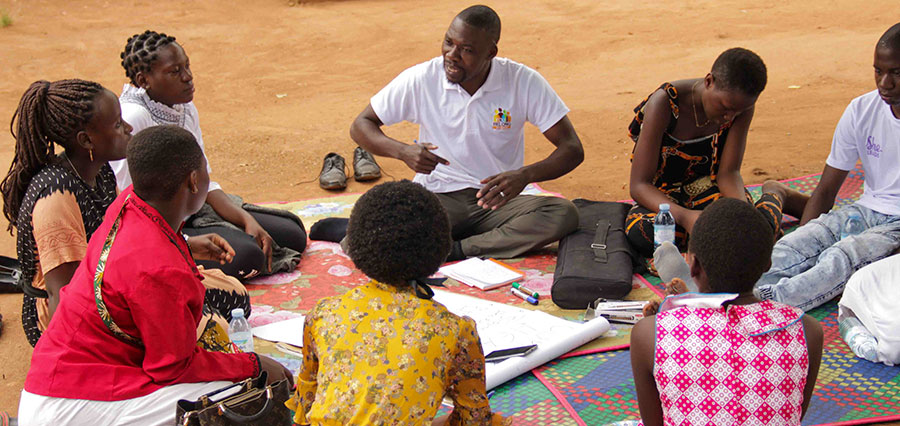
Youth Consultation Groups — Full of life, energy, and hope
At YouBelong Uganda, we are vigilant in learning more from the people for whom we care, their families, and in particular, their main carer. This knowledge assisst us in refining our mental health interventions to make them even more effective Our Youth Consultation Groups are an important signal that we want to give, to recognise the dignity of each person, and acknowledge the uniqueness of each person’s lived experience of mental illness and their recovery journey.

March 07, 2026
David Cappo presents at World Health Summit in Berlin
October 16, 2023: David Cappo, YouBelong’s co-founder and CEO presented “Innovations from the Global South to address the mental health treatment gap—a case study from Uganda” At the 2023 World Health Summit in Berlin.
The presentation addressed issues and factors in the mental health treatment gap in Africa and recommended new thinking and innovations that are low cost, sustainable, and easily integrated within existing health systems.
Using YouBelong’s work in Uganda as a case study, Cappo reviewed the organization’s model for community mental health care intervention — returning patients to their families and communities with appropriate training and supports in place. He discussed pre-and post- discharge planning, family empowerment, and the importance of the lived experience of persons with psychosis in research design, policy development and the implementation of mental health services.

March 07, 2026
International Women’s Day Discussion Initiated by YouBelong Uganda Women For Women Group
A report on the women in recovery group discussions conducted by the YouBelong Uganda Women for Women Group (WFW) in partnership with the Occupational Therapy Department at Butabika National Referral Mental Hospital on March 5, 2024.
Download the full article as a pdf
The WFW Group, in collaboration with the Occupational Therapy Department of Butabika National Referral Mental Hospital, facilitated group discussions based on the topic; the importance of participation and engagement in income-generation. The discussion was an activity to celebrate the International Women’s Day, and the objectives were;
- To encourage women recovering from severe mental illness to be active participants in their recovery.
- To show the relevance of income generation and participation in recovery.
- To explore challenges and myths attached to participation and income generation among women.
16 women in recovery on the convalescent wards of the Butabika National Referral Mental hospital, Kampala, Uganda were divided into two groups, and each group was facilitated by a WFW team member. The occupational therapist co-facilitated in one of the groups. The group discussion lasted for an hour. The group discussions were particularly focused on the empowerment of women. During the discussions, two women in recovery who had previously been a part of the YouBelongHOME program shared their lived experience of severe mental illness, focusing on their journey of engagement in income-generation.
The participants mentioned several ways that they participate in their families and communities, and it was noted that a significant number of the participants have to balance multiple productive roles simultaneously. Activities engaged in range from house chores like house cleaning, washing utensils, cooking, washing clothes, and subsistence farming to income-generating activities like weaving mats and baskets, coffee growing, and laundry services.
The discussion showed that women’s participation and engagement in income-generation enable them to support and care for themselves and their children by providing food for their families, paying medical bills, and paying school fees for their children.
“I have been growing sugar cane, raised my 7 children and paid for their school fees. Now if I get sick, they send me money to go to the hospital” said a 60-year-old female recovering from severe mental illness.
More to that, the women believed that their participation and engagement in income-generation had earned them respect and dignity from the community members. As women living with severe mental illness, engagement in income-generation is one way they deal with the stigma and discrimination generated by their families and community.
Despite the fact that participation in family and community activities and engagement in income-generation aids recovery for people living with severe mental illness, the discussion with the women indicated that they face a number of challenges.
The side effects of medication, including general body weakness and excessive sleep, make them inefficient at work. They are thought to be lazy and less motivated to work.
Participants mentioned that there is job insecurity when a person living with mental illness relapses, and they have to leave work for a few months. There is uncertainty of whether they will retain their jobs. The majority of the participants preferred being self-employed or running a personal business because employers have limited knowledge on how to support employees living with mental illness.
The stigma generated by the community members is a barrier to effective participation. Community members fear hiring women with mental illness because it is believed that they are under performers.
A participant, 30-year-old said, “People think that we are dirty and just irresponsible.”
The participants mentioned that the names which they are given in the community lead to an inferiority complex, hence limited participation in activities.
“They call me a pig, a monkey… even my parents. They say that the world is tired of me. I don’t know why they treat me like that.” A 20-year-old participant said.
The discussion showed the effect of the patriarchal norms and values on women’s mental health. A participant mentioned that she worked hard and bought land, but her husband does not allow her to use it the way she would want to. She said that she felt cheated and disrespected by her husband, and she longed for revenge.
More to that, much as the participants showed that income is a resource for them to effectively fulfil their reproductive roles, some are denied this opportunity to use their resource to care for their children.
A 35-year-old lamented, “I have been working so hard for my children, but their paternal family came and took them away, it discouraged me so much. It even caused me mental illness. You work for your children, yet you are not sure they will stay with you. They can take them away anytime.”
It is believed in the community that women gossip a lot when they get an opportunity to meet with other women. Some women mentioned that their family members are not comfortable with them getting jobs away from their homes because they might use it as an opportunity to gossip.
Amid the challenges faced by women, the participants recognized that there is a need for access to information about the available economic and financial resources. In addition, women living with severe mental illness need to be equipped with more skills for income-generation and supported to retain those skills, considering that severe mental illness affects functionality.
Key observations by the team
- Participants were inspired by the stories of lived experiences. Some individuals said that the stories restored their hope for recovery.
- The participants contributed passionately to the topic for discussion and we observed that they resonated with the gender issues.
- Regular group discussions are seen by the YouBelong Uganda WFW Group as an avenue to increase the number of women in recovery for psychoeducation and mutual support from other women before discharge.
- There is a need to work with the families of the women in recovery in order to get tangible results out of the discussions.
Authors: Nsangi Birungi Ethel & Wanyenze Winnie
March 07, 2026
Village Heath Teams (VHTs) are the front line of the Uganda’s health system
Village Heath Teams (VHTs) are the front line of the Uganda’s health system (including mental health), and they key to its effective operation. They are groups of volunteers appointed by the Government and given some very basic training. They are in every village and know their local community. When someone has an illness, either physical or mental, they do all that they can to refer the person to local health centres or hospitals. YouBelong Uganda is involved in their training and supervision, even on very remote VHTs on islands in Lake Victoria.

February 22, 2019

Meeting the President of Uganda, His Excellency, President Yoweri Museveni
Statement by Monsignor Daved Cappo AO, CEO, YouBelong
On Monday 4thFebruary, 2019, I was honoured to meet the President of Uganda, Yoweri Museveni, at the State House, Entebbe, in a delegation led by Sir Michael Hintze, and including Dr Annalisa Jenkins, Chair of the UK Board of Trustees of YouBelong, Mr Patrick Bitature, a distinguished Ugandan businessman and Patron of YouBelong Uganda, and Mr Tim Nash, assistant to Sir Michael.
January 14, 2019

Friends of YouBelong Newsletter — the sewing machine story
Our January, 2019 Newsletter is devoted to presenting the YouBelong model of care as a set of working parts that come together to create social value. To illustrate this, we have used the story of the Singer sewing machine.
Please have a look at this story and think about the value of a working system of mental health care to the community at large.
August 30, 2018

Friends of YouBelong Newsletter — Issue 3
Our September 2018 newsletter presents an overview of our approach and concrete examples of struggles and success.
Download the full newsletter here
Please download and read about the unique model of mental health care, developed and implemented by YouBelong in Uganda. This issue discusses the importance of implementation and the key parts of our Uganda model from bringing people with mental illness back into their communities.
March 15, 2018

Friends of YouBelong Newsletter – Issue 2
Our new newsletter highlights our progress in Uganda and presents concrete examples of struggles and success.
Download the full newsletter here
Please download and read about our efforts to bring people out of institutions to live dignified lives with their families and village communities, and prevent relapse and return to institutional life. This issue highlights our priority budget needs to train staff, create pre- and post-discharge care packages, train village health teams, and build a sustainable programme in Uganda that will serve as a model for other countries.
June 01, 2017

Friends of YouBelong Newsletter – Issue 1
The first issue of our newsletter highlights our progress in Uganda and what we need to build out our model of “care in the community” for people recovering from mental illness.
May 31, 2017

Our new minibus – an essential vehicle for YouBelong!
YouBelong staff were delighted with the arrival of our 2005, 14 seater minibus in May. With deep gratitude to a donor who provided us with $15,500, we were able to purchase this essential vehicle for YouBelong.
December 14, 2016

YouBelong Appoints Chief Psychiatrist for YouBelong-Uganda
YouBelong-Uganda welcomes Dr Byamah Brian Mutamba as its chief psychiatrist.
Monsignor David Cappo, Chief Executive of YouBelong-Uganda said that he is delighted that Dr Mutamba, the co-founder of YouBelong-Uganda. has agreed to accept this important role. Monsignor Cappo said that ‘he is a distinguished Ugandan with a passion for the development of a public health approach in low resourced settings, like Uganda, to address the growing burden of mental health problems’.
December 08, 2016

YouBelong-Uganda announces the appointment of Dr Nathan Kenya-Mugisha MBChB, MMed, MPH, as the Chair of its Board of Management, based in Kampala
— Welcome to the Inaugural Chair of the Board of Management —
YouBelong – Uganda
Monsignor David Cappo, Co-Founder and Chief Executive of YouBelong-Uganda welcomes the appointment of Dr Nathan Kenya-Mugisha, as the inaugural chair of YouBelong-Uganda.
YouBelong-Uganda is both proud and honoured to announce the appointment of Dr Nathan Kenya-Mugisha MBChB, MMed, MPH, as the Chair of its Board of Management, based in Kampala. The appointment will commence on the 1st January 2017. Dr Kenya-Mugisha brings to the position a wealth of experience in the health sector in Uganda and in the Ministry of Health.
December 04, 2016

YouBelong appoints Dr Shevin Jacob and Dr James Tibenderana to Board of Trustees
Professor Fiona Verity, Chair of the Board of Trustees of YouBelong, is delighted with the appointment of two eminent doctors, who will both strengthen the Board in its focus on Uganda in the years ahead.
Full Story