


About the YouBelong Women For Women Group
Women for Women is a group of social workers, mental health nurses and Psychiatric Clinical Officers in YouBelong Uganda that was established to develop strategies to support women and girls aged 12-35 years build capabilities to deal with the effects of social and cultural inequalities on mental health.
Our Vision Statement
Influencing family, community and cultural systems to create a generation of women with increased capabilities to cope with distress posed by gender, social and cultural inequalities.
Our focus is to help build mental and emotional wellbeing, resilience, interpersonal skills, strong family and community relationships, vibrant network of support and opportunities leading to voice of girls and young women in Uganda.
The Women For Women group at YouBelong Uganda is committed to help break down the barriers; Cultural, social, and economic that prevent many girls and young women in Uganda from realizing their potentials and from participating with equality in all aspects of community life in Uganda.
Our Objectives
- To create awareness about the effects that social and cultural inequalities have on adolescents and young women.
- To influence a gender perspective in YouBelong Uganda projects design and development.
- To contribute to the body of knowledge on gender inequalities through research.
- To create community linkages for mental health services.
Our Strategies
- Create awareness about social and cultural barriers through YBU social media and other media platforms.
- Create partnerships and collaborate on projects that promote gender equality.
- Collaborate with men in design and implementation of projects.
- Review already existing body of literature on social and cultural barriers.
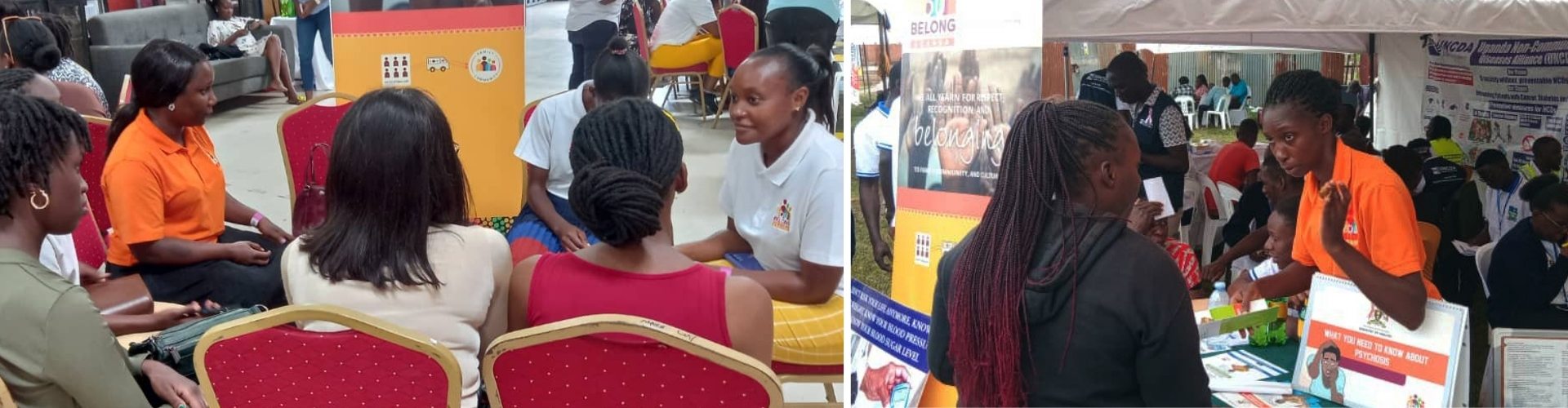
Women for Women work in the Domestic Violence Response System in Uganda
What is the problem?
Globally, 1 in 3 women has been subjected to physical or sexual violence in her lifetime. In Uganda, according to The State of the Nation Population Report, 36% of women experience sexual violence, most often from a partner. During a discussion with the Principal Magistrate of Tororo, a key stakeholder in the Domestic Violence Response System, he highlighted weak reform measures for perpetrators as a contributing factor to this high prevalence.
“You release them today and tomorrow they are back… prisons are not doing enough to rehabilitate these people.” Principal Magistrate, Tororo.
This statement underscores a critical flaw in the current system: it manages incidents but does not go deep enough to uproot the underlying causes of violence. Other systemic bottlenecks identified by stakeholders include limited infrastructure, under-resourced departments, and the prioritization of mediation over justice.
What needs to happen?
To transform the current response system from one that merely manages incidents to one that actively prevents repeat violence, we recommend a targeted approach focused on repeat offenders. This involves reinforcing the authority of court-issued protection orders and supporting partnerships between the Judiciary, Probation Services, and the Uganda Prisons Service. Such collaboration would engage repeat offenders in interventions addressing anger management, healthy relationships, substance abuse, and harmful gender norms that perpetuate violence. Ultimately, this ensures that offenders face meaningful, consistent, and rehabilitative sanctions.