


Category: Stories of Hope
Stories of Hope
MUSA RECONNECTED TO FAMILY AFTER TWO YEARS IN MENTAL HOSPITAL
March 22, 2026
Family support is critical for reintegration of people with Mental, Neurological and Substance Use disorders from institutional care back into their families and communities. In its work to decongest Butabika National Referral Hospital, the YouBelong team screens patients to ensure there is a family home and carer ready to receive them. The team relies on hospital records, ward information, and family contacts. In Musa’s case, these sources offered almost no hope.
Musa, 28, diagnosed with epilepsy, had been classified as a long-stay patient in a convalescent ward. For two years no family member had visited or claimed him. His file contained only clinical notes and a single name that was later discovered to be his uncle’s. The Ward-In-Charge explained that Musa had originally been brought in by the police. With no traceable connections, he remained in the ward for two years.
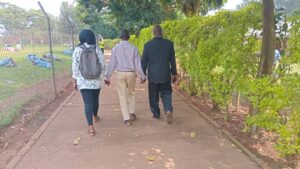
Determined to reconnect him back to his family, the YouBelong team engaged Musa directly. His speech and memory were impaired, requiring patience and persistence. He said he came from Masajja, a suburb of Kampala. He recited six phone numbers but none led to anyone who knew him. On the seventh attempt, a man answered who recognised the name in the file. He was Musa’s father! It emerged that Musa’s brother had been his primary caregiver, but the uncle’s name had mistakenly been recorded at hospital admission.
The father was overwhelmed with relief. When Musa realised his father was on the phone, he cried out repeatedly, “Father, it is me! It is me, your son!”
His voice was full of deep emotions. He lifted his hands high, and rushed to the Ward-In-Charge to tell her the good news.
Later, the YouBelong team and Ward-In-Charge was able to meet with the Musa’s family. The family explained that two years ago, after his mother’s death, Musa had argued with his brother and wandered away from their home in Masajja. The family had searched tirelessly, even using radio and television announcements, visits to various hospitals, including Butabika, and even mortuaries, but without success.

“I dreamt several times that he was dead,” his sister told us, “but I held on to hope that we would find him.”
The team provided psychoeducation to prepare the family to support Musa at home. He was discharged, and the team continues follow-up calls to strengthen the family’s connection to local community mental health services.
Every person in care carries a deep need to belong to family and community, where they are accepted and supported. In Musa’s case, inadequate records led to a very serious delay in family reunion. For many others, stigma, caregiving burdens, and limited knowledge further hinder reintegration. Yet through the persistence, and in partnership with Butabika National Referral Hospital, the YouBelong team continues to bridge these gaps—restoring hope, dignity, and belonging to people in recovery from severe mental illness, and their families.
A Journey Of Care
December 03, 2021
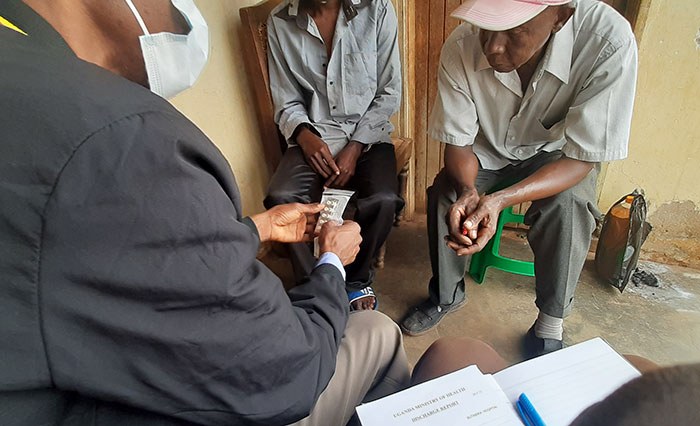
‘Magero’ is a 23 year old male diagnosed and living with Bipolar Affective Disorder. Due to transport/movement restrictions that were part of SOPs set by Ministry of Health in response to the spread of COVID-19, the family was faced with the challenge of accessing mental health services including medicines refill. As a result, Magero experienced a recurrence of symptoms that led to his re-admission to hospital. While at the convalescent ward (waiting for his relative to pick him up, but all in vain), the hospital was struck by COVID-19 infection among in-patients. The YouBelongHOME team in an emergency response to such a crisis in an overcrowded mental hospital, urgently prepared him for his return home. Along the return journey, the team was faced with a poor road network. And in the photo a team member is removing pieces of thorny tree branches that could deflate the tyres on the YouBelong van. After post-discharge visits and discussions, and connection to local community leaders and referral to a nearby health Centre, his family reported, ‘we are now informed on what to do and where to go just in case’.
A hard road to recovery from substance use
December 03, 2021
‘Kizito’ is 28 years old and was diagnosed with substance-induced psychosis. He learnt the habit of substance use from his friends. He has had one admission in the mental hospital, prior to which he was presenting with signs of abnormal behavior, i.e., undressing in public, uncoordinated speech. This prompted his family to bring him to the national mental hospital, even though they had no understanding of Kizito’s illness. Kizito was recruited by the YouBelong program and supported with counselling to help him understand the nature of his illness and motivate him to stop using substances. His family was prepared to receive him back home after a pre-discharge family home visit. He was returned home, and in the photo the YBH team had carried out a post-discharge family home visit. A YouBelong team member engaged in one-on-one sessions of motivational interviewing and psychoeducation with Kizito to enhance his motivation to stop substance use. By the time of termination our involvement, Kizito seemed to be stabilizing and his family able to cope with any relapses in the home environment.
Beginning Again, This Time With Help
December 03, 2021
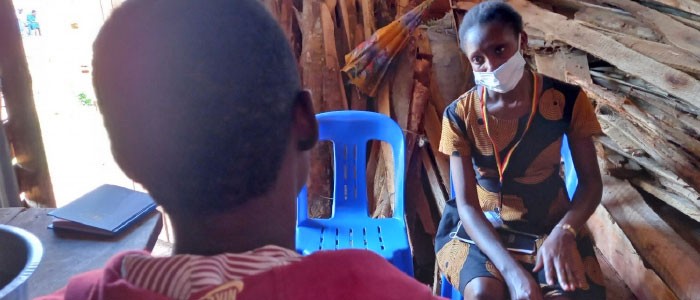
The YouBelong team visited ‘Sarah’ in a village in Kampala for a pre-hospital discharge family assessment. Sarah is the mother of Annet, a 21-year-old diagnosed with HIV induced psychosis. We were led by Sarah to a temporary housing structure made of wood where she had arranged some seats for us. There was a big pile of wood stacked in one corner and in another corner there was a mattress, a bag and utensils.
During the assessment Sarah told us that she and her daughter sleep in this makeshift structure, which belongs to her friend and it is what they call home. Sarah said that on many occasions Annet complains that they do not have a place of their own and she cannot support her mother to build their own home. Annet is a teacher by profession but because of the COVID-19 lockdown which left schools closed for approximately two years, she lost her job and cannot support her mother anymore. Her mother sells pancakes which earn her only enough for them to have 1 meal a day. Sarah believes that the conditions under which they live greatly affects Annet’s mental health. During this year she has had two admissions at Butabika hospital; she stoped her medication because she does not see any hope for recovery.
The YouBelong team, in the post discharge phase designed a plan for Annet and her mother to ensure that Annet maintains recovery at home. She was referred to Nansana outreach clinic which is a walkable distance from their home where she would be reviewed and get her medication re filled at no cost. Annet was educated about the relationship between HIV and mental illness and also encouraged a re connection to her HIV clinic.
Overcoming Many Barriers, And Wanting To Thrive
September 16, 2021
‘Lucy’, 21, lives with her stepmother in Wakiso district, Kampala, Uganda. She has exhibited intermittent signs of mental illness since her teenage years, which until recently, her family only understood as stubbornness. This lack of understanding of her mental illness had a serious negative impact on her relationships with her family, her local community, and the students and her teachers at her school. After eight years of trying to cope with Lucy at home, her family reached out to Butabika National Mental hospital.
At only 21 Lucy has had a difficult life. She has a child, but was unable to take on the role of nurturing mother. As she got older she increasingly turned aggressive and violent to the extent that she became unmanageable in the community. Lucy is a victim of physical, sexual, and financial abuse. Her first admission to Butabika mental hospital was in April 2021 where she was diagnosed with Bipolar Affective Disorder. After discharge she was returned home by the YouBelong Uganda team under the COVID-19 emergency response program.
Lucy’s goals after discharge from hospital are to do basic activities in her village community (washing clothes, fetching water for sale, and gardening) for income generation, learning more about taking care of her child, getting married, progressing to a fully functional life and making a happy family. The post-discharge support goals of the YouBelong team were; empowering Lucy with knowledge about her mental illness, and daily living skills, building her self-image and self-esteem, as she continues her recovery in the community, empowering her stepmother and her father with knowledge about mental illness, medication adherence, and ways to support Lucy in her recovery, connecting the family and service user to mental health outreach clinics that operate from time to time at the local health centre, and identifying community resources for Lucy to assist her to connect with income generation activity, so as to help the service user have a more meaningful and productive life and live to achieve her life goals. Lucy is a young woman, who wants to go beyond the shocking abuse that she has experienced, manage he mental illness, and belong to her family and local community.
Determined To Change
September 16, 2021
‘Godfrey’ is a 27- year-old male from Wakiso district, Uganda who was diagnosed with Alcohol induced Psychosis on his first admission to Butabika Mental Hospital in 2018. YouBelong met Godfrey on his second admission in 2021 after he had spent two months in hospital with no family member visits.
After his first hospital admission, Godfrey didn’t adhere to his prescribed medication due to his lack of insight and low level of knowledge about his mental illness. Prior to his 2021 admission, he became aggressive and destroyed property which included car mirrors of local community members. He was arrested by the Police for destructive behaviour and was put in custody for days before the Police realized that he had a mental problem. He was then readmitted to Butabika hospital.
The YBU team traced his family and engaged with them to prepare to have Godfrey back home with medication and ongoing support. With Godfrey and the family, the YBU team developed a post-discharge empowerment plan. The plan included psycho-education with a focus on Godfrey’s mental illness and alcohol use, medication adherence, understanding the role of medication in the treatment of his illness, and the importance of attending reviews and engaging in productive income-generating activity that is critically important in the process of recovery.
Godfrey plans to take his medication as prescribed and report any early signs of relapse so as to avoid readmission in the hospital. He says hospital admissions is very costly for him because of the delay in achieving his life ambitions. He plans to try hard to avoid use alcohol because as he says, it does not solve any of his problems, but instead makes them worse. He also has plans on helping his grandmother do garden work and have produce to sell. Godfrey has plans of resuming his business in South Sudan where he still has connections.
‘I Have Hope Of Living With Mental Illness Because It’s Not The End Of Me’.
September 16, 2021
‘Mutyaba’ is a 25-year-old male who lives in the Wakiso District with his parents and siblings. He was diagnosed with Bipolar Affective Disorder in 2016 and has had four previous hospital admissions. His current admission was in May 2021. He had been in the mental hospital for a period of three months prior to YouBelong team intervention. At the time of the YBU pre discharge assessment, he expressed a loss of hope in the future, and he felt abandoned by his family.
Mutyaba told the YBU team that he had spent a year off medication because he couldn’t cope with the side effects. He showed a serious lack of insight into his mental illness and was struggling with the social stigma of mental illness, as well as lack of emotional support, and access to medication.
His family lives in a remote village in Wakiso, Uganda with no ready access to transport or to mental health services. When early signs of mental illness appeared in his teenage years, there was no possibility of early intervention.
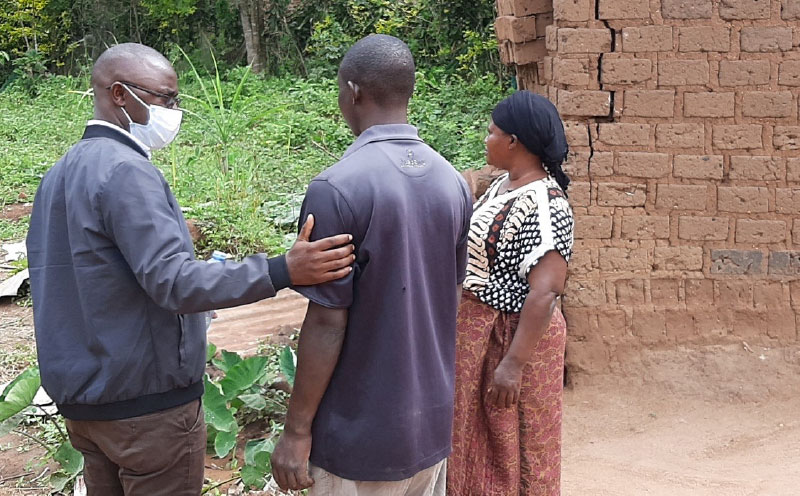
When the YBU team traced and contacted Mutyaba’s family they were told that when he relapses he becomes very aggressive and violent and his family members fear him. Family relationships were further compounded by his father’s belief that Mutyaba was not sick, but was a problem child who just wanted a lot of attention and to be taken care of by his mother.
Consequently, the family was very hesitant to receive Mutyaba back home from hospital. The YBU team needed to do a lot of pre-discharge engagement with the family including psycho-education about Mutyaba’s mental illness and ways to provide enhanced emotional and social support, before deciding to accept Mutyaba back home. Discussions about stigma and the process of recovery were important.
Mutyaba’s goals for his return home were to maintain recovery for at least 2 years on medication and continue with his brick making income-generating activity so as to be fully functional and to support himself. We liaised with the hospital staff to reduce dosage and change medication to one with fewer side effects. The goals of post-discharge support agreed to by the YBU team, Mutyaba, and his family were; to resolve conflict and misunderstandings in the family due to relapse behaviour that could hinder emotional and social support; psycho-education about Mutyaba’s mental illness; empowering the family members with problem solving skills; promoting and enhancing self-care, and enabling family members and Mutyaba to better understand his diagnosis and the importance of taking his medicine as prescribed; and to develop a sense of identify and belonging as a family.
With this plan, and the decision by his family to have Mutyaba back home, hope in the future has been rekindled. As Mutyaba said to the YBU worker, ‘I have hope of living with mental illness because it’s not the end of me.’
Sylvia’s journey
May 17, 2021
Told by a YBU social worker, a young Ugandan woman, passionate about her work and her country
I met Sylvia at the national mental hospital here in Kampala, Uganda, after I was told she needed help to get ready to move on and get back to her family. Nurses at the hospital told me that they felt her family might have given up on her and want her to stay in the hospital for many months or even years.
Assessment
 In clinical language we call this first meeting an ASSESSMENT of Sylvia’s personal, family, social, and medical profile. It is when we get to know each other. I learn about Sylvia’s life and struggles, and I show her that we care about her, her dignity as a person, and her right to belong and feel wanted and cared for in the community, as she recovers from severe mental illness. Sylvia tells me that she is 44 years old. The doctors have told her she has bad depression, is addicted to alcohol, and probably has liver disease. Also, she has been having visions (psychotic episodes with violent outbursts). She has 5 children from 2 to 25 years old. Her abusive husband left her with 3 children and she has 2 other children by different men. None of these men care for their children. We talk for an hour and I can feel her depression and the pain in her life from years of brutal beatings and abuse, abandonment and sorrow. I tell her that we are with her to help her get back home to her two young children and to recover.
Family mapping
I introduce Sylvia to FAMILY MAPPING — a tool developed by YouBelong Uganda (YBU). She draws her own family map. She says “Tom (her eldest son) and Jacki (her landlady) care for me and are very important persons in my life”. The next step in family mapping is to get Sylvia’s key family members/friends to draw their map. I made arrangements to go to the village and meet with Tom and Jacki. It is a long journey to the village, but these meetings, before Sylvia leaves the hospital and comes home are a very important part in helping Sylvia in her recovery.
Tom is suspicious and reluctant. “My mother won’t change. It has been too long”. And he wonders if she has been bewitched and evil spirits have entered her. But it is clear that he loves his mother and will come around to support her if we are involved in her care. Jacki, the landlady is a very caring person, and has been looking after Sylvia’s two small children while Sylvia has been in the mental hospital, but she is scared of the “crazy talk and smashing things”. I get Tom and Jacki to do their version of a FAMILY MAP. Comparing Family Maps
As I compare their map with Sylvia’s I see a major difference. Sylvia has left out of her map, a “drinking group” of men and women with whom she has been spending most of her days. They drink local alcohol. It’s nasty and can do a lot of harm to health. And I am told that two of these men have fathered her last two children. I quickly see that this group is a destructive force and Sylvia will need to separate from them.

Preparing for return
As we speak, I feel that Tom and Jacki are becoming more willing to have Sylvia back home. So, I start to do some education about mental illness, alcohol addiction, and the importance of taking medication every day. We talk about how to manage difficult behaviour and solve problems. They are responsive, so I go further, and suggest that we come up with a plan to support Sylvia back home.
When I go back to see Sylvia, she says “I left out the drinking group because I was embarrassed. They cause me trouble but they are friends.” I tell Sylvia that true friends don’t cause harm. We talk and develop goals to help her settle back home. This is called PRE-DISCHARGE ASSESSMENT, which is important, because if there is no preparation, people discharged from hospital are often quickly rejected by their family, relapse, and return. Sometimes they are just abandoned to the streets. Our work is to do all that is possible to empower Sylvia and her family to avoid relapses or return to hospital.
Returning home
When we take Sylvia back home in the YBU minibus, she is excited. Tom and Jacki welcome her back, neighbours in the village come around and clap. Support from the village community is very important. Things are going well until the drinking group also arrives with alcohol and sits next to Sylvia who looks very uncomfortable. But Jacki, who owns the house, takes them outside and explains that Sylvia wants to get better, and not drink. They grumble but go away.
We talk and plan what we can all do to support Sylvia, and her personal goals, which include:
- educating her children
- stop drinking
- getting her old business back to make some money
- having her own home
- seeing relatives
- Post-Discharge plan
We call this goal-setting and planning the POST DISCHARGE EMPOWERMENT PLAN. We agree that Sylvia will help her landlady for the next few months with domestic work, to keep busy and well-connected with Jacki.
Follow-up and recovery journey
For the next few weeks I travel to the village and meet with Sylvia, Jacki, and her young children. Sylvia had one drinking session in the first week home, but she is really motivated to stop alcohol and I think we have broken the link with the drinking group. Jacki got neighbours in the village to help keep the group away from Sylvia.
 It is likely that Sylvia may have a few more relapses, but the recovery journey has begun. Besides visits, I have phone support calls with Sylvia and Jacki, who is providing support and monitoring of medication, stress issues, and behaviour. I need to move on to other patients in the mental hospital who need our support, so I connect Sylvia to local health services, for ongoing care. Training localhealth care centres is important for long term care. A few months have now passed, I phone to see how Sylvia is going. She said “I am now doing much better and have my business back. I am working well and I haven’t had any drinking session as yet. My depression is going down. I take my medicine. People like me more.”
No other organisation in Uganda, is doing the type of work that YouBelong Uganda is engaged in, as seen in Sylvia’s Story. This is ground breaking work: a new pathway for mental health care in Uganda, and for East Africa, is emerging. We build a bridge of support between the hospital, the family, the local village community, and local health centres, and produce integrated care. We are working to scale up a sustainable model of mental health care in low income countries, and we are beginning in Uganda.
‘’Tom’’ is eventually accepted and supported by his family
April 26, 2021
Accepting and supporting people with severe mental illness and substance use disorder is a major challenge among families and local communities in Uganda.
Most families perceive that people living with alcohol and substance use disorders choose to maintain their behavior. This is often due to limited knowledge of substance use disorders and treatments and makes it challenging for them to support their family members.
This was evident in the family of the 40 years old Tom who was diagnosed with a substance use disorder following his admission to Butabika mental hospital. At the time of his discharge the ward manager found it difficult to reach his family since there were no phone contacts left in Tom’s hospital file. Tom was therefore referred to the YouBelong team for resettlement. We traced down his family and was able to meet with his uncle and aunt who seemed disappointed that they were found. With further discussion with Tom’s uncle and aunt, the team found that the family thought that admitting Tom to the hospital, hopefully for the longest time possible was all there was for them to do. The team had a discussion with them in their village home explaining Tom’s diagnosis (substance use disorder with psychotic features) and the nature of this illness in an effort to build acceptance of Tom and his need for family support in this recovery.
The team highlighted the need for mutual support among family members, regular reviews of the soon to discharge person and family’s involvement in the care of their family member. The team encouraged them to accept support from the YouBelong team to understand Tom’s support needs and also receive him back home for continued care. After this engagement, the family accepted Tom back home and welcomed the YouBelong support interventions to help them learn about mental illness and substance use. This brought a huge difference in the family’s perception about mental illness in general and substance use disorders in particular.
Care for families supporting a member with severe mental illness
July 11, 2018
YouBelong Uganda works to counsel families that are going through difficulties caused by mental illness because they may end up traumatized and thereby affect the recovery of the family member.