


‘I Have Hope Of Living With Mental Illness Because It’s Not The End Of Me’.
September 16, 2021
‘Mutyaba’ is a 25-year-old male who lives in the Wakiso District with his parents and siblings. He was diagnosed with Bipolar Affective Disorder in 2016 and has had four previous hospital admissions. His current admission was in May 2021. He had been in the mental hospital for a period of three months prior to YouBelong team intervention. At the time of the YBU pre discharge assessment, he expressed a loss of hope in the future, and he felt abandoned by his family.
Mutyaba told the YBU team that he had spent a year off medication because he couldn’t cope with the side effects. He showed a serious lack of insight into his mental illness and was struggling with the social stigma of mental illness, as well as lack of emotional support, and access to medication.
His family lives in a remote village in Wakiso, Uganda with no ready access to transport or to mental health services. When early signs of mental illness appeared in his teenage years, there was no possibility of early intervention.
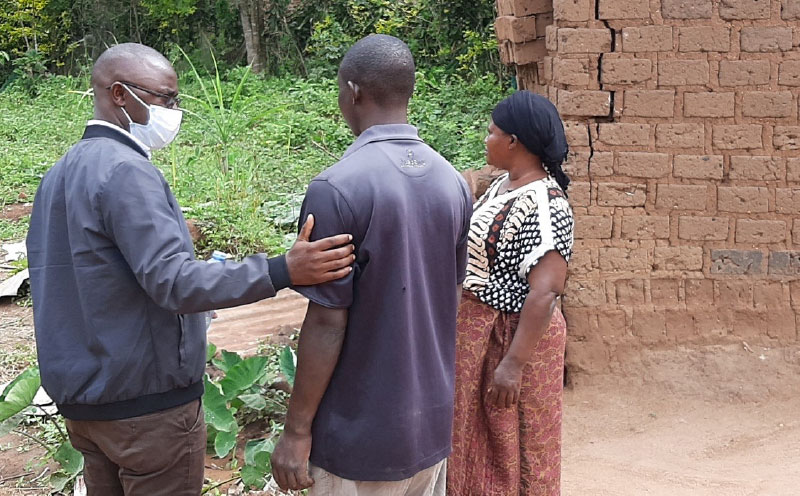
When the YBU team traced and contacted Mutyaba’s family they were told that when he relapses he becomes very aggressive and violent and his family members fear him. Family relationships were further compounded by his father’s belief that Mutyaba was not sick, but was a problem child who just wanted a lot of attention and to be taken care of by his mother.
Consequently, the family was very hesitant to receive Mutyaba back home from hospital. The YBU team needed to do a lot of pre-discharge engagement with the family including psycho-education about Mutyaba’s mental illness and ways to provide enhanced emotional and social support, before deciding to accept Mutyaba back home. Discussions about stigma and the process of recovery were important.
Mutyaba’s goals for his return home were to maintain recovery for at least 2 years on medication and continue with his brick making income-generating activity so as to be fully functional and to support himself. We liaised with the hospital staff to reduce dosage and change medication to one with fewer side effects. The goals of post-discharge support agreed to by the YBU team, Mutyaba, and his family were; to resolve conflict and misunderstandings in the family due to relapse behaviour that could hinder emotional and social support; psycho-education about Mutyaba’s mental illness; empowering the family members with problem solving skills; promoting and enhancing self-care, and enabling family members and Mutyaba to better understand his diagnosis and the importance of taking his medicine as prescribed; and to develop a sense of identify and belonging as a family.
With this plan, and the decision by his family to have Mutyaba back home, hope in the future has been rekindled. As Mutyaba said to the YBU worker, ‘I have hope of living with mental illness because it’s not the end of me.’