SCAPE-U Dissemination Meeting Highlights Community-Led, Lived-Experience approaches to Mental health care in Uganda
SCAPE-U Dissemination Meeting Highlights Community-Led, Lived experience approaches to Mental health care in Uganda
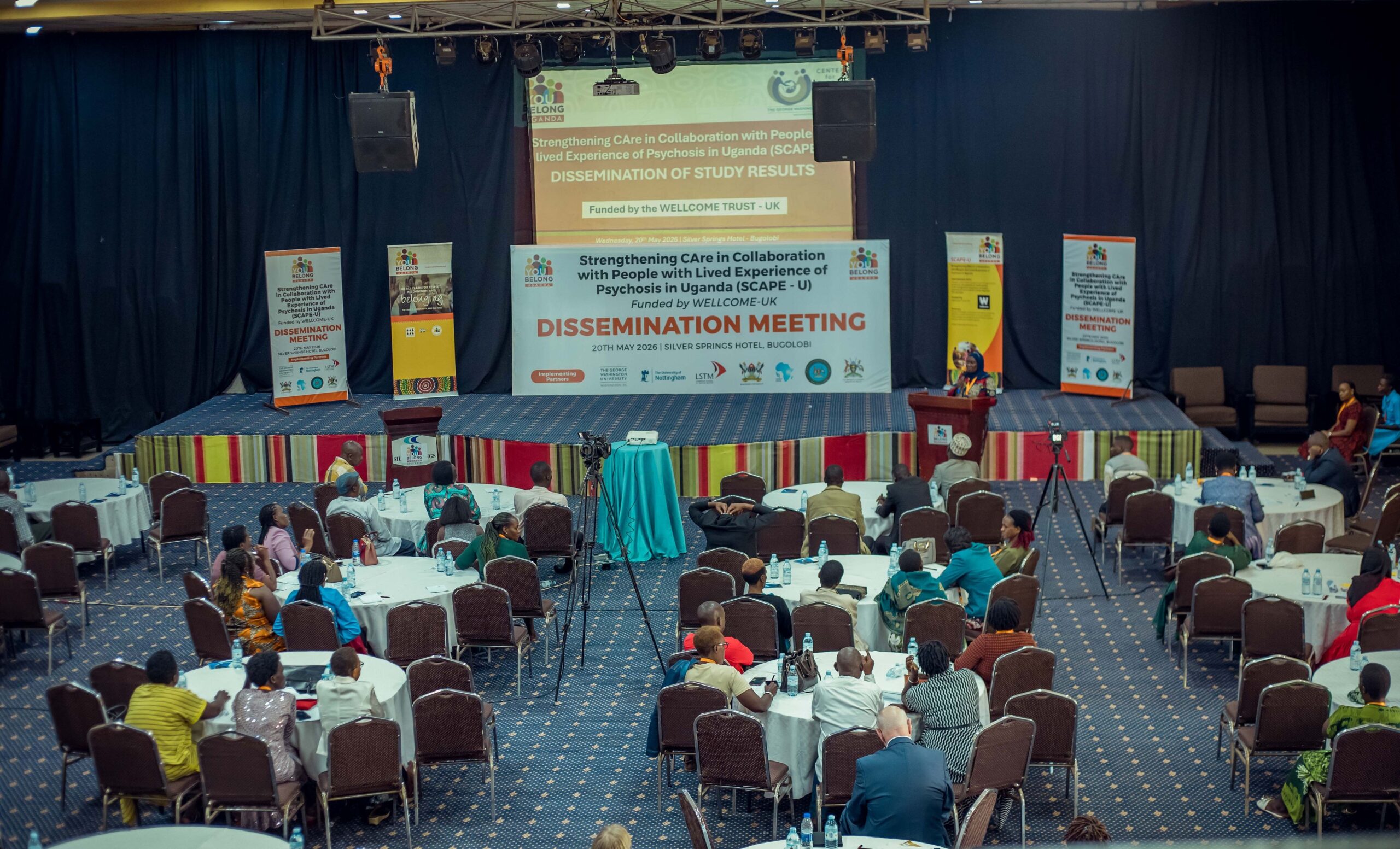
Stakeholders from Uganda’s mental health sector gathered at Silver Springs Hotel in Bugolobi on 20th May 2026 for the SCAPE-U dissemination meeting, an event convened to share study findings and experiences from the SCAPE-U study. The study collaborated with people with lived experience of Psychosis in Uganda and was funded by Welcome Trust UK. The meeting provided a platform for researchers, health workers, people with lived experience, caregivers, policy actors, funders, and community representatives to reflect on what worked, what was learned, and how the findings can inform future mental health programming in Uganda.
The dissemination brought together people with lived experience of psychosis, caregivers, service user facilitators, Village Health Teams, primary health workers, researchers, Ministry representatives, funders, and partner institutions including YouBelong Uganda, Butabika National Referral Mental Hospital, George Washington University, the University of Nottingham, and Wellcome Trust representatives. Their participation reflected the multi-sectoral nature of SCAPE-U and the importance of collaboration between communities, health facilities, research institutions, government structures, and families in improving mental health outcomes.
Throughout the day, presentations and panel discussions underscored the central role of people with lived experience in shaping mental health care. SCAPE-U demonstrated that people who have experienced psychosis can contribute meaningfully as peer supporters, co-designers, advocates, trainers, and community educators. Through photovoice, recovery narratives, home visits, and direct engagement with families, primary health workers and VHTs, service user facilitators helped reduce stigma, encourage treatment adherence, support recovery, and improve understanding of psychosis at household and community level.
During a dialogue session, SCAPE-U facilitators shared how they were trained to use photographs and personal recovery stories to engage families and communities. Their accounts showed that participation in SCAPE-U not only supported others but also strengthened their recovery journey, medication adherence, family relationships, and sense of purpose. Caregivers and community health workers also described how the home visits helped families better understand mental illness, reduce fear and stigma, and support people with psychosis to remain in care.
Study investigators presented SCAPE-U as a feasibility and acceptability study designed to test a collaborative model of care for people with psychosis across primary care, community, and home settings. The study highlighted three key areas of intervention: strengthening the capacity of primary health workers to diagnose and manage mental health conditions, improving the ability of VHTs to identify and refer people in need of support, and engaging people with lived experience to provide home-based peer support through structured and supervised visits.
The findings suggested that collaboration with people with lived experience is both valuable and feasible when supported by appropriate training, supervision, safeguarding tools, wellness planning, and access to medical and psychosocial support. The meeting also identified important implementation challenges, including limited availability of essential mental health medicines at lower-level facilities, the transfer of trained health workers, difficulties identifying newly diagnosed patients, stigma, relapse risks among peer supporters, and the need for sustainable support systems beyond project timelines.
Speakers emphasised that community-based mental health care must be inclusive, practical, adequately supported, and sustained. A recurring message from the meeting was that “there is nothing for us without us,” highlighting the need to include people with lived experience in the design, delivery, evaluation, and scaling of mental health services. Dr. Harriet Nakku commended the work and described it as a powerful step towards “bringing mental health back to the community”
The dissemination identified several priorities for health systems and policy. These included strengthening mental health services at primary care level, integrating mental health into routine outpatient care, training and mentoring primary health workers and VHTs, improving referral pathways, expanding community sensitisation, developing age-appropriate information and education materials for schools, engaging faith leaders and other community actors, and improving access to essential mental health medicines. Participants also discussed the need to formalise and sustain peer support roles so that service user facilitators can continue contributing beyond the life of individual research projects.
Participants called for the SCAPE-U model to be scaled beyond Kampala and Wakiso so that more communities across Uganda can benefit from locally grounded, person-centred mental health care. They encouraged stronger collaboration among the Ministry of Health, Butabika National Referral Mental Hospital, district health teams, community structures, schools, faith leaders, caregivers, researchers, funders, and people with lived experience. The meeting closed with a shared commitment to ensure that the knowledge generated through SCAPE-U contributes to practical action, stronger community mental health systems, reduced stigma, and improved recovery support for people living with psychosis and their families.
Gallery